What spinal decompression does
The treatment table applies a gentle, controlled traction force intended to reduce pressure and improve movement in targeted spinal areas.
 Call us (843) 627-3222
A newer care option in Dillon
Controlled, computer-guided traction may offer a non-surgical option for selected patients with certain disc-related neck or back conditions.
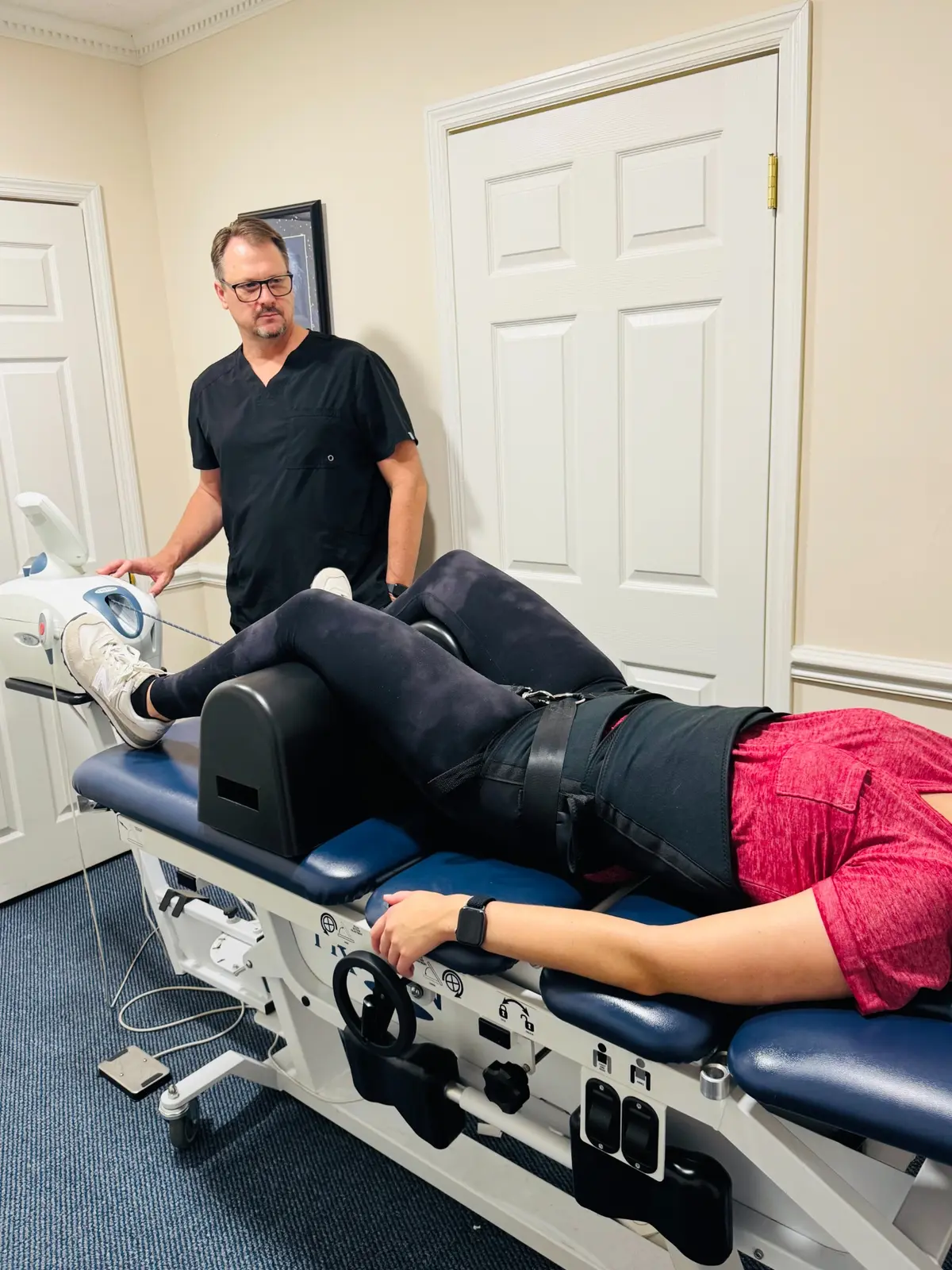
The treatment table applies a gentle, controlled traction force intended to reduce pressure and improve movement in targeted spinal areas.
Some people with disc-related pain, radiating symptoms or persistent neck or low-back complaints may be candidates. A clinical examination is necessary because decompression is not appropriate for everyone.
Patients remain clothed and are positioned securely on the treatment table. Settings are individualized, and Dr. Bracey monitors comfort and response throughout care.
Conditions often evaluated
Dr. Bracey may consider spinal decompression for selected patients with the following conditions. A diagnosis alone does not determine candidacy; your examination, health history and any imaging all matter.
A research-informed view
Research on non-surgical spinal decompression is still developing. Some small clinical studies report improvements when decompression is included in a broader rehabilitation plan, while other trials found outcomes comparable—not superior—to conventional motorized traction.
A 2022 randomized trial reported greater improvements in pain and disability when non-surgical decompression was combined with routine physical therapy than with physical therapy alone.
Review the study on PubMed →A small randomized trial found improvement in both groups. Decompression was associated with a greater reduction in measured herniation size, but was not statistically superior overall.
Review the study on PubMed →Another randomized trial found that both non-surgical decompression and conventional motorized traction improved pain and function, without evidence that decompression was superior.
Review the study on PubMed →These studies do not establish that decompression will help every patient. Dr. Bracey evaluates expected benefits, limitations and alternatives before recommending care.
Information on this page is educational and does not replace an in-person examination, diagnosis or treatment recommendation.
An examination is the best way to learn which care options may be appropriate for you.